
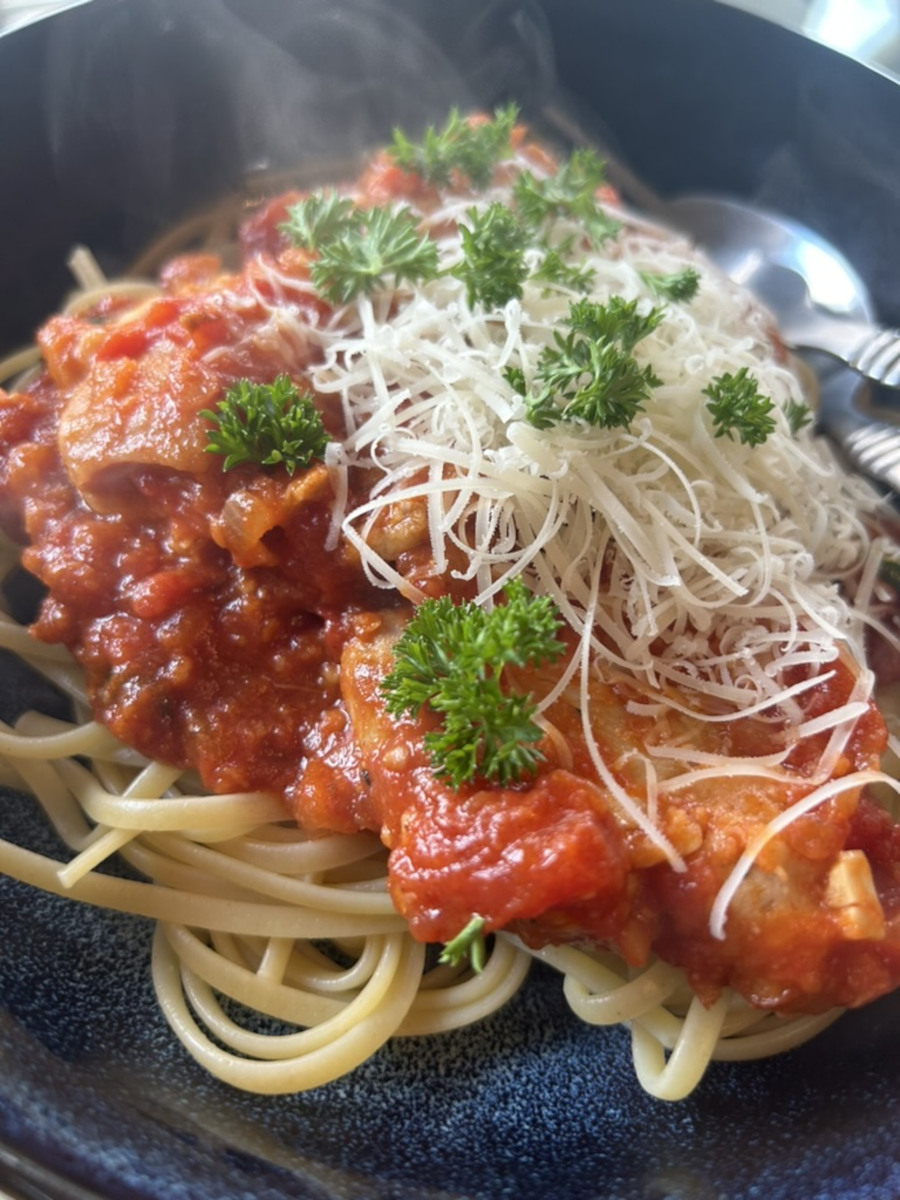
Pollo in salsa di pomodoro is a simple, beautiful dish with amazing Italian flavors. It literally means ‘chicken in tomato sauce’ in English. In the United States it’s commonly called Chicken Pomodoro. It sounds way better in Italian though, doesn’t it? Say it a few times and you’ll be speaking with an Italian accent for the rest of the day!
Serve it over your favorite pasta with Parmesan cheese and with parsley for garnish. With colors of red, green and white, Chicken Pomodoro is reminiscent of the Italian flag!
You better make plenty because your guests will almost certainly want second helpings!

Chicken Pomodoro

Equipment
- cutting board
- kitchen knife
- large heavy bottom sauce pan with lid
- large spoon
- large bowl
- colander
Ingredients
- 4 chicken thighs – pounded to even thickness
- ¼ cup all-purpose flour
- 1 tbsp olive oil – extra virgin
- 1 tbsp butter – unsalted
- 1 pinch kosher salt
- ½ medium yellow onion – finely chopped
- 3 clove garlic – minced
- 28 ounce canned stewed whole tomatoes – such as San Marzano
- 1 bay leaf
- 10 basil leaves – torn
- 20 ounce Linguini pasta – cooked al dente
- ¼ cup Parmesan cheese – freshly grated
- 1 tbsp fresh parsley – torn
Instructions
- Rinse and dry chicken thighs.

- Dredge the thighs in flour, and shake off any excess.

- Gather and prepare the aromatics.

- Heat 1 tbsp olive oil and 1 tbsp butter in a large, heavy bottomed sauce pan over medium heat.

- Cook the chicken until well browned on both sides, about 5-7 minutes.

- Remove chicken and set aside under loose foil to keep warm.

- Add the chopped onion to the same skillet, and sauté with a pinch of salt, about 5 minutes.

- Add the garlic and cook until aromatic, about 1 minute

- Empty the contents of a 28-oz can of whole peeled tomatoes into a medium bowl.

- Crush the tomatoes with your clean hands, but leave a few smaller chunks.

- Add the tomatoes to the pot, and bring to a simmer.

- Add the bay leaf and partially cover with a lid. Allow the sauce to simmer for about 40 minutes until thickened and concentrated in flavor. Make sure to stir often, about every 10 minutes.

- Bring a separate large pot of water to a boil, and cook the linguini to package instructions, about 10 minutes.
- Remove the lid and return the browned chicken to the pan, coating with some of the sauce. Simmer uncovered for another 10 minutes while you boil the pasta. Add a little pasta water if needed to thin the sauce.

- Turn off the heat on the sauce and adjust the seasonings. Stir in the fresh basil leaves and finish it with a drizzle of olive oil.

- Serve over the cooked pasta, along with some freshly grated parmesan and garnish with a pinch of parsley.


Notes
PRIVATE NOTES
Nutrition
Related Recipes
Arrabbiata or Pomodoro Sauce

More Information
The kind of tomatoes you use will make a big difference in the flavor. I like to use San Marzano tomatoes. According to Martha Stewart’s website:
The volcanic soils in the San Marzano PDO—a relatively small region in southern Italy between Naples and Salerno—are famed for producing tomatoes with a balanced flavor that combines sweetness, tomatoey intensity, and just the right amount of acid.
So that’s why they are so good! I planted some San Marzano seeds in my own garden about a month ago. Technically I can’t call them San Marzano because that’s a protected name. According to Google AI:
San Marzano tomatoes are protected by the European Union’s Protected Designation of Origin (PDO) regulation, which is also known as Denominazione d’Origine Protetta (DOP) in Italian. This regulation defines where and how the tomatoes must be produced to be eligible for the designation.
There’s no volcanic soil in North-West Oklahoma, but the plants are coming up strong, and I’m starting to get a few tomatoes already. I’ve got high hopes. I love garden fresh tomatoes! I’ll update this after my first harvest to let you know how it goes. I suspect they will taste at least as good as the Roma tomatoes we commonly grow around here.
If you do have left-overs, don’t worry. Just mix the pasta into the sauce and put it covered in the refrigerator. I find it’s is even better the next day!
In the mood for something more spicy? Add a pinch of red pepper flakes to the sauce when you are simmering it.
Check out Arrabbiata or Pomodoro Sauce to learn about the differences between these two classic Italian sauces.

Care to comment? I'd love to read it. Please be cool, respectful, relevant, positive or constructive, and leave an actual comment. Thanks!