
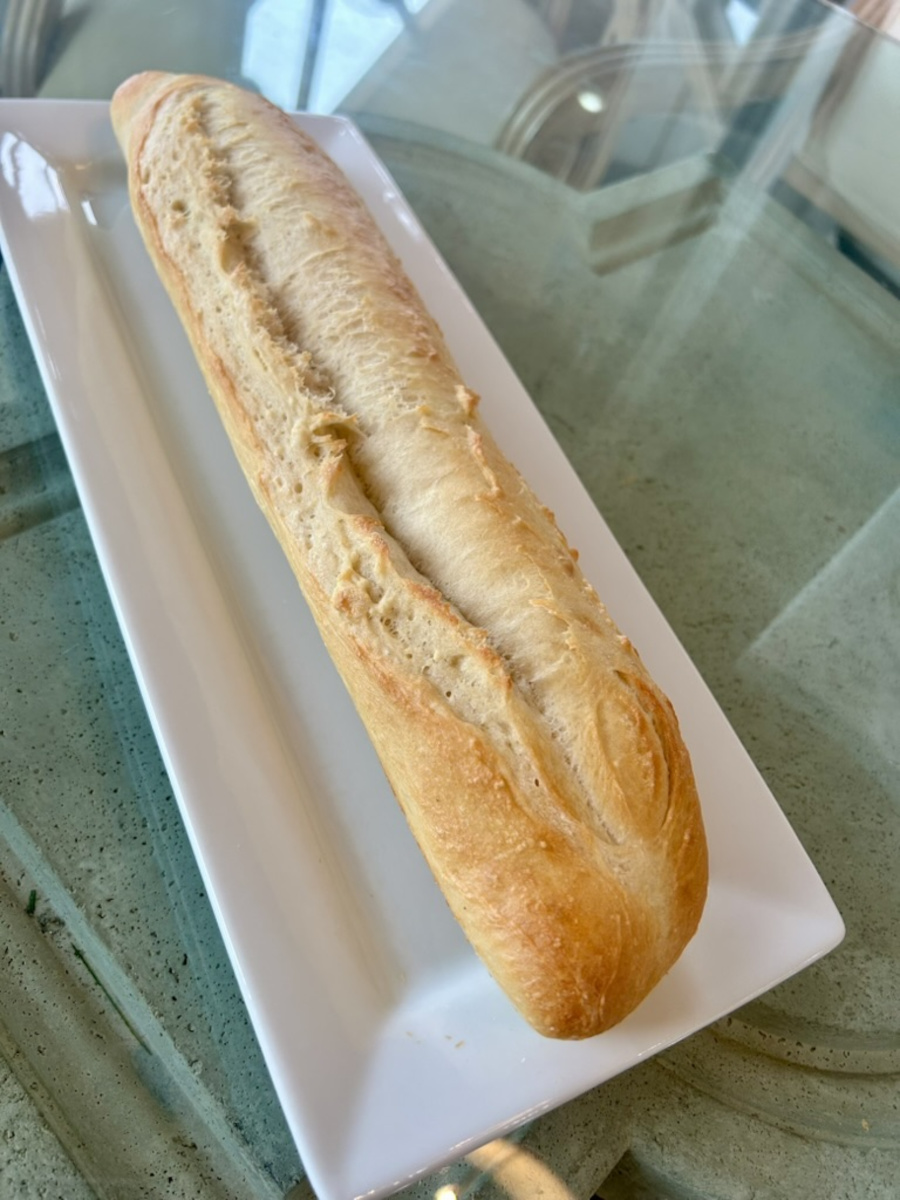
French Baguettes are thin, tapered loaves of bread. They are crisp and golden brown on the outside, but soft and chewy on the inside. Baguettes pair perfectly with rustic soups, stews, and savory foods. Try it slathered with Herbed Butter for a delightful addition to your meal. I’m happy to share DaLynn’s recipe, which makes the most delicious, amazing bread. I hope you love it as much as I do.
French Baguettes Recipe

French Baguettes

Equipment
- water mister – optional
- perforated bakery tray – optional
- Bread machine – if using
- large greased bowl
- bench scraper – for cutting and scraping the dough
- dough lame – for scoring the dough before baking
Ingredients
For the dough
- 1 cup warm water
- 2 ½ cups bread flour
- 1 tbsp sugar
- 1 tsp salt – heaping
- 1 ½ tsp instant yeast
For the crust
- 1 egg – whisked
- 3 tbsp water – for misting the dough
Instructions
If using a mixer
- Use a stand mixer to mix all dough ingredients into a large, greased bowl. Cover with plastic wrap or a dish towel. Let it rise in a warm, damp place until doubled in volume.1 cup warm water, 2 1/2 cups bread flour, 1 tbsp sugar, 1 tsp salt, 1 1/2 tsp instant yeast


If using a bread machine
- Add all ingredients to the bread machine. Set the machine to the dough cycle. Allow the cycle to complete. Apx. 1 ½ hours rise time, depending on machine.


Rolling out the dough
- Remove the dough from the bowl or bread machine, and place it onto a large floured surface. Use a bench scraper to cut the dough into two equal portions.

- Use a rolling pin to flatten each portion into an oblong shape.

- Roll each portion over onto itself several times to form a log shaped loaf. Pinch the ends together, and tuck underneath for rounded edges.

- Use a bread lame or very sharp knife to make diagonal slices every 2 inches. If using a non-stick bakery tray, carefully transfer the loaves to each section of the tray. If using a baking sheet, spray it with cooking spray and carefully lay the loaves longwise on top.

- Brush with egg wash to completely cover the surface of each loaf. Preheat the oven to 375 degrees. Allow the dough to stand covered in the egg wash while the oven heats up.1 egg

- Thoroughly mist the bread with water.

- Add the dough to the hot oven. Bake for 22 minutes, or until golden brown. Mist again after the first 10 minutes of baking.3 tbsp water


PRIVATE NOTES
Nutrition
More Information
Making Large Baguettes

Make large French Baguettes in the same way without dividing the dough ball in half. The baking time will be the same as if you were making two smaller baguettes.
French Boule

Instead of forming into a baguette, try forming the dough into a round boule. Score the top with a sharp knife, and bake in a cast iron skillet on parchment paper.
Leftovers
French bread doesn’t keep long at room temperature, so plan to use it right away. It’s so good, that I doubt you will have many leftovers. If you do, freeze it in a plastic bag. It an be easily reheated in the microwave.
Other Uses
Thinly slice French Baguettes on the diagonal, then toast to form an excellent foundation for sweet or savory toppings. In French cuisine, these little open-faced sandwiches are called tartines. A Smoked Salmon Tartine combines cream cheese, thin slices of smoked salmon, red onions, capers, and lemon zest. Delicious!
Toast a thick slice of baguette and cover it with melted Gruyere cheese. Float it on top of a hot bowl of French Onion Soup. The bottom of the bread will soak up some of the soup, while the gruyere will stay melted on top. It’s so good!
Cajun and Creole Cuisine
Warm French bread is an almost essential part of any Cajun or Creole meal. Use it to push savory Creole Jambalaya onto your fork, or to soak up some Seafood Gumbo. Spread on some Herbed Butter to make it even better.
Tricks
Misting the Dough
Use a clean hand-held plant mister to wet the dough just before baking. This creates a thin layer of moisture on the dough, which helps prolong the formation of crust. Mist again about 10 minutes into the bake. The dough will continue to rise in the oven. It will form a light, even crust by the time it’s done baking.
Scoring the Dough
Score the dough with a sharp knife, or bread lame before baking. This will create weak points in the crust. It will more easily and evenly expand once the crust starts to form on the bread. I like to score it every two inches across small baguettes. This makes it easy to tear the bread into even knobs. On large baguettes, I’ll make a long score all the way down the middle of the loaf.
Tearing or Slicing Bread
It really doesn’t matter whether you tear or slice the bread. I prefer to tear it rather than slice it with a knife, unless I’m making French Tartines. I find that it looks more rustic, and visually appealing when torn.
Related Recipes


Cajun Seafood Gumbo

Chicken Gumbo

French Onion Soup

Creole Chicken Sauce Piquant

Creole Jambalaya


Care to comment? I'd love to read it. Please be cool, respectful, relevant, positive or constructive, and leave an actual comment. Thanks!