
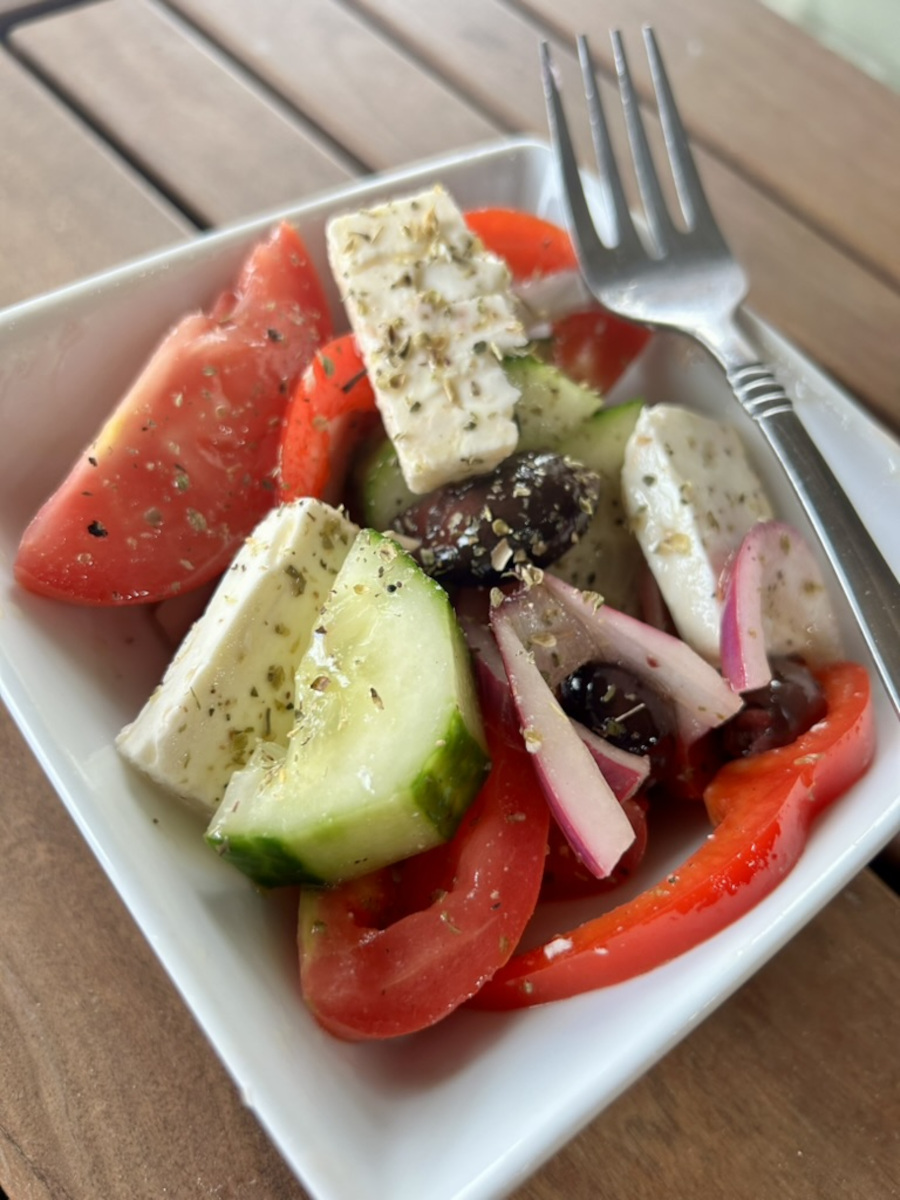
Meet Horiatiki, the classic Greek salad that’s as vibrant as a Mediterranean summer. This light, refreshing dish bursts with fresh, juicy tomatoes, crisp English cucumbers, mildly zesty onions, earthy bell peppers, and briny olives, all crowned with creamy, crumbly feta. A drizzle of olive oil, a splash of vinegar, and a generous sprinkle of oregano tie it all together. Whether paired with sizzling char-grilled kabobs, or featured on a Mediterranean party platter, this salad is a colorful, heart-healthy celebration of flavor. I love it dearly, and I hope it brings a little sunshine to your table too!
Greek Salad Recipe

Greek Salad

Equipment
- kitchen knife
- cutting board
- salad bowl
Ingredients
- 1 medium red onion – thinly sliced into half circles.
- 4 roma tomatoes – cut into bite-sized wedges.
- 1 English cucumber – stripped and cut into bite-sized wedges.
- 1 bell pepper – cored and sliced into rings.
- 1 cup Kalamata black olives – pitted
- 1 ½ tsp dried oregano
- 1 tsp kosher salt
- ½ tsp black pepper – freshly cracked
- ¼ cup extra virgin olive oil
- 2 tbsp red wine vinegar
- 7 oz feta cheese – block cheese, cut into thin rectangles.
Instructions
Defang the Onion (optional, but recommended)
- Fill a small bowl with cold water, add a Tbsp of red wine vinegar to the water, then add the onion slices. Set aside for 10 – 30 minutes. This will mellow the onions sharp raw taste.1 medium red onion
Combine the Vegetables
- Add the tomatoes, cucumber, bell pepper, and olives into a salad bowl. Drain the onions and add them as well.4 roma tomatoes, 1 English cucumber, 1 bell pepper, 1 cup Kalamata black olives
Add the Seasonings
- Sprinkle most of the oregano, plus the salt and pepper. Add the oil and vinegar, then give it a good toss.1 1/2 tsp dried oregano, 1 tsp kosher salt, 1/2 tsp black pepper, 1/4 cup extra virgin olive oil, 2 tbsp red wine vinegar
- Top with the feta and the remaining oregano. Plate and serve.7 oz feta cheese
PRIVATE NOTES
Nutrition
More Information
The Stars of Horiatiki
Kalamata Olives
These dark, almond-shaped gems hail from the Peloponnese region of Greece, named after the city of Kalamata. Revered since ancient times, olives were sacred to Athena in Greek mythology, symbolizing peace and wisdom—legend says she gifted the olive tree to humanity. Kalamata olives bring a deep, briny richness to Horiatiki, with a meaty, slightly chewy texture and a fruity, wine-like finish. Packed with heart-healthy monounsaturated fats and antioxidants, they’re a Mediterranean diet staple that supports cardiovascular wellness. Their bold flavor contrasts beautifully with the salad’s fresher elements, making every bite a little more indulgent.
English Cucumbers
While not traditionally Greek, English cucumbers (sometimes called seedless or hothouse cucumbers) have earned their place in modern Horiatiki for their crisp, refreshing bite and tender, edible skin. In ancient Greece, cucumbers were prized for their cooling properties—Hippocrates even touted them as a remedy for heat-related ailments. Their mild, subtly sweet flavor and satisfying crunch balance the salad’s sharper notes. Low in calories and high in water content, they’re a hydrating, heart-friendly addition that keeps this dish light yet substantial.
Red Onions (and the Art of Defanging)
Red onions add a pop of color and a mildly sharp bite to Horiatiki, a nod to the robust flavors of rustic Greek cuisine. In ancient Greece, onions were valued for their medicinal qualities—believed to purify the blood and boost vitality. To tame their bite, try “defanging”: soak thinly sliced red onions in cold water with a splash of red wine vinegar for 10-15 minutes. This softens their pungency, leaving a sweet-tart zing and a crisp-tender texture that melds seamlessly with the salad. Rich in quercetin, an antioxidant linked to heart health, they’re as good for you as they are tasty.
Roma Tomatoes
Roma tomatoes, with their firm flesh and lower water content, are a perfect pick for Horiatiki, offering juicy bursts of flavor without turning the salad soggy. Tomatoes weren’t native to Greece—they arrived via the New World in the 16th century—but they’ve since become a cornerstone of Mediterranean cooking. In Greek culture, they’re a symbol of summer abundance, often paired with olive oil in village recipes. Their sweet-acidic tang and meaty texture shine in this dish, while their lycopene content delivers a heart-protective boost. Choose ripe, deep-red Romas for the best balance of flavor and structure.
Oregano
No Horiatiki is complete without oregano, the soul of Greek seasoning. Known as rigani in Greece, this aromatic herb grows wild on the country’s sun-drenched hillsides and has flavored dishes since antiquity—ancient Greeks used it both culinarily and medicinally, believing it aided digestion and warded off illness. Its earthy, slightly peppery warmth with hints of mint and citrus elevates the salad, tying all the flavors together. Oregano’s antioxidants, like rosmarinic acid, contribute anti-inflammatory and heart-healthy benefits, making it more than just a garnish. A generous sprinkle (fresh or dried) is the finishing touch that screams “Greek countryside.”
Related Recipes
Roasted Greek Lemon Potatoes

Tuscan Spice Blend

Tuscan Shrimp

Bacon Fried Trout

Care to comment? I'd love to read it. Please be cool, respectful, relevant, positive or constructive, and leave an actual comment. Thanks!