

Smoking meats is all about controlling heat. In this guide, I will show you how to build a proper fire and maintain a low and slow smoke that will produce amazing results every time.
Smoking Meats Guide

Smoking Meats

Equipment
- heavy gauge steel smoker with offset firebox
- charcoal starter chimney
- starting torch
- remote digital thermometer with multiple probes
Ingredients
- good quality lump charcoal, or seasoned firewood – oak or hickory
- flavored wood chunks – optional mesquite, applewood, or cherrywood
Instructions
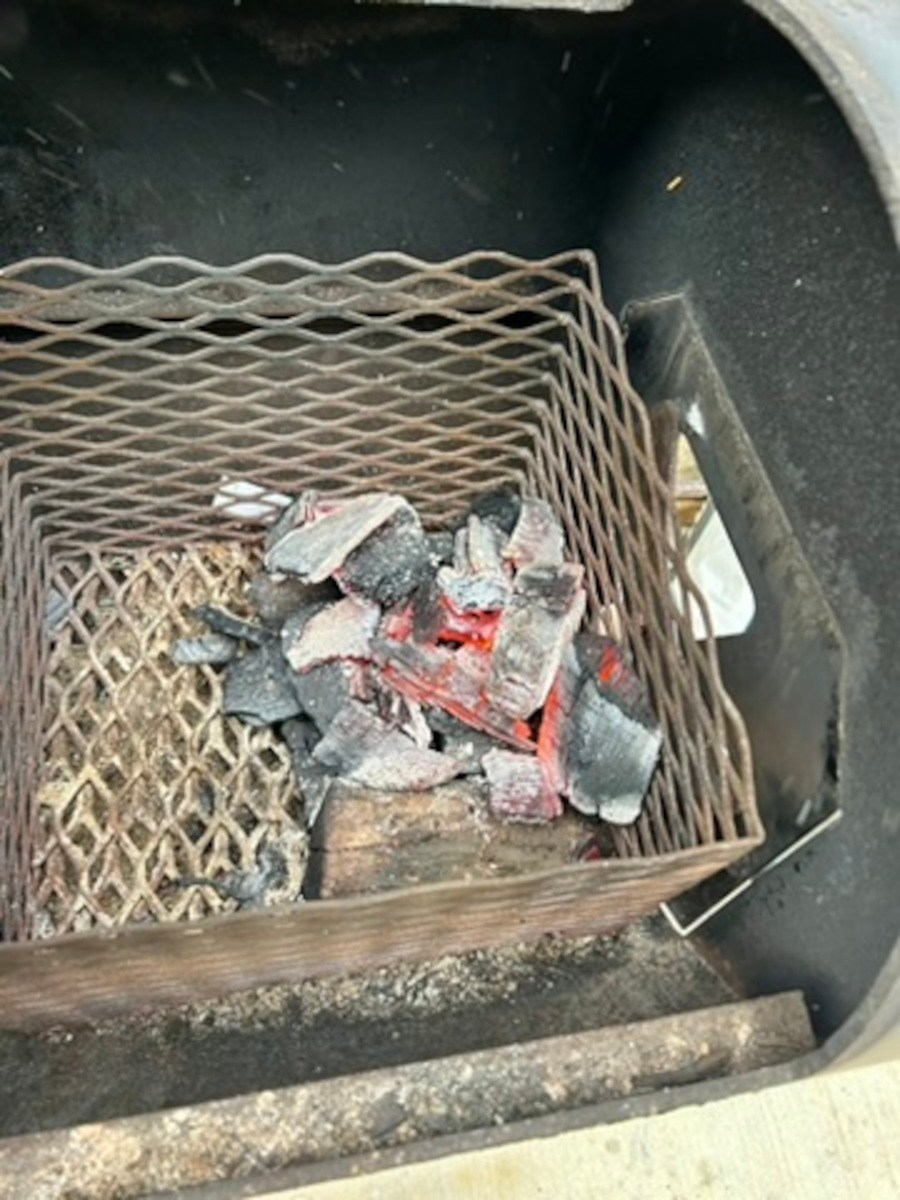
- Open up the firebox. Make sure any existing ashes are cleaned out. I'm using a charcoal basket, but this is not absolutely necessary. Make a small pile of good quality lump charcoal toward the outside of the firebox. Optionally use good quality, dry oak or hickory firewood.

- Fill a starter chimney halfway up with charcoal. Lite the chimney, and allow the coals to catch fire.

- Pour the lit charcoal directly on top of the pile.

- Close the firebox lid and door, but open the vents all the way. You want lots of air to be moving through the smoker.

- Use a remote digital thermometer to monitor the heat. Focus on the air temperature probe, not the meat temperature probes. Allow the smoker to slowly heat up to 225℉, which is the perfect temperature for smoking most meats.

- There should be only a thin blue smoke coming from the exhaust stack. If the smoke is heavy, the fire is not hot enough and is being starved of oxygen. It can take 45 minutes to an hour before the smoker temperature is stabilized.

- Monitor the pit temperature throughout the smoke. If you see the temperature falling, add a small amount of charcoal to the pile. Only add about half a chimneys worth at a time. You want to maintain a small bed of hot coals, not a roaring fire. If you have accidentally added too much charcoal, the temperature can rapidly rise in the smoker, which is not what you want. Close the vent by half to try to regain control of the temperature.


PRIVATE NOTES
More Information
Smokers
All smokers are different. You will need to adjust these general guidelines to suit your needs. The only way to learn how to manage your smoker, is to smoke lots of meat! Take notes. Remember what worked and what didn’t work. You will have lots of time on your hands while the meat is smoking to figure things out.

I prefer to use a standard smoker with an offset firebox. My smoker is made from heavy-gauge steel. It takes a while to heat up, but the extra mass in the steel helps to maintain a steady temperature.
Thin gauge steel pits react very rapidly to the changes in the heat of the fire, and to the ambient temperature outside. They can be frustrating to operate, because you need to constantly fiddle with it to keep a steady heat.
Low and Slow
The best advice for making great barbecue is to keep the temperature low and slowly smoke the meat. You want the meat to get just hot enough to render the fat while picking up smokey flavor by being exposed to the smoke for the longest possible time.
Keep the fire low. You want a small bed of hot coals, not a roaring fire. You also want a lot of air moving through the smoker. The hot air from the fire will naturally move up through the exhaust stack, pulling the smoke with it. The smoke will wash over the meats in the pit, imparting delicious smoke flavor.
The only way you can have a small hot bed of coals and good airflow through the smoker is to maximize available oxygen, but limit the amount of fuel available to burn. You do this by opening the vents wide and by not using too much charcoal.
My smokes will often last for many hours. I’ll start early in the morning, and finish late into the night, or even the next day. You have to be very patient. It can be frustrating when the meat temperature stalls out for what seems like hours. Just relax knowing that when it finally does come up to temperature, it will be succulent, delicious, and well worth the wait.
Don’t Put Cold Meat In The Pit!
Let the meat come to room temperature first, before loading the pit. Cold meat will form condensation which traps the soot particles from the smoke. This makes an acrid, bitter, blackness on your meat called creosote. This is the quickest way to ruin your barbecue, and you have only just begun!
Fill That Pit!

It makes no sense to have a half-empty barbecue pit. It takes the same amount of work and the same amount of charcoal if you are smoking one rack of ribs, or a pit full of barbecue.
Finish in an Ice Chest
If it’s getting late, and you are ready to call it a night, but the meat temperature is not quite where you want it – here is a trick that will let you go to sleep, but will still produce good results: Wrap the meat in heavy foil and towels, then put it into an ice chest. Close the lid tightly. The next morning, the meat will be tender and delicious.
Use a vacuum sealer
A vacuum sealer machine is your best friend. Portion out your smoked meats into vacuum seal bags, then store it in the freezer. It will keep for months! To reheat, just pop a frozen bag into a large pot of water, and bring it up to a simmer. Simmer for about 30 minutes, and you will have barbecue that tastes as good as the day you smoked it!
In fact, when I am barbecuing for a large party, I may do several smokes. I recently catered a party of about 40 people, where I provided brisket, pulled pork, spare ribs, chicken, and sausage. There was no way I could smoke all of that meat at once, and I have a pretty good sized smoker. I smoked and stored the meat over several weekends. When it was time to serve, I filled up a large crawfish boiler with water, and then used a propane burner to heat it up. I put the vacuum sealed bags of pre-smoked barbecue into the simmering water, allowing it to heat up. The barbecue came out perfect, as if I had made it all just ahead of the party.
Outside Temperature
When smoking meats, the outside air temperature can make a big difference in how you maintain your fire. If it is cold outside, you will burn through much more fuel while trying to maintain a steady temperature. So, plan accordingly. Make sure you have extra charcoal, because you won’t want to run to town when you run out. Especially if you have been drinking beer all day, as I have been known to do while barbecuing!
Flavored Woods
I find it is best to use oak or hickory to maintain my coal bed. But, you can add flavor to smoked chicken by throwing in a few chunks of mesquite. Or, if you are smoking a pork butt, applewood or cherrywood chunks can add a nice flavor. Don’t try to smoke with only flavored woods. This is way too expensive, and the flavor can be overpowering. Plus, wood like mesquite burns very hot, so it would be difficult maintaining the proper low and slow heat.
Related Recipes
Smoked Pork Spare Ribs


Smoked Reverse Seared Tomahawk Ribeye

Care to comment? I'd love to read it. Please be cool, respectful, relevant, positive or constructive, and leave an actual comment. Thanks!